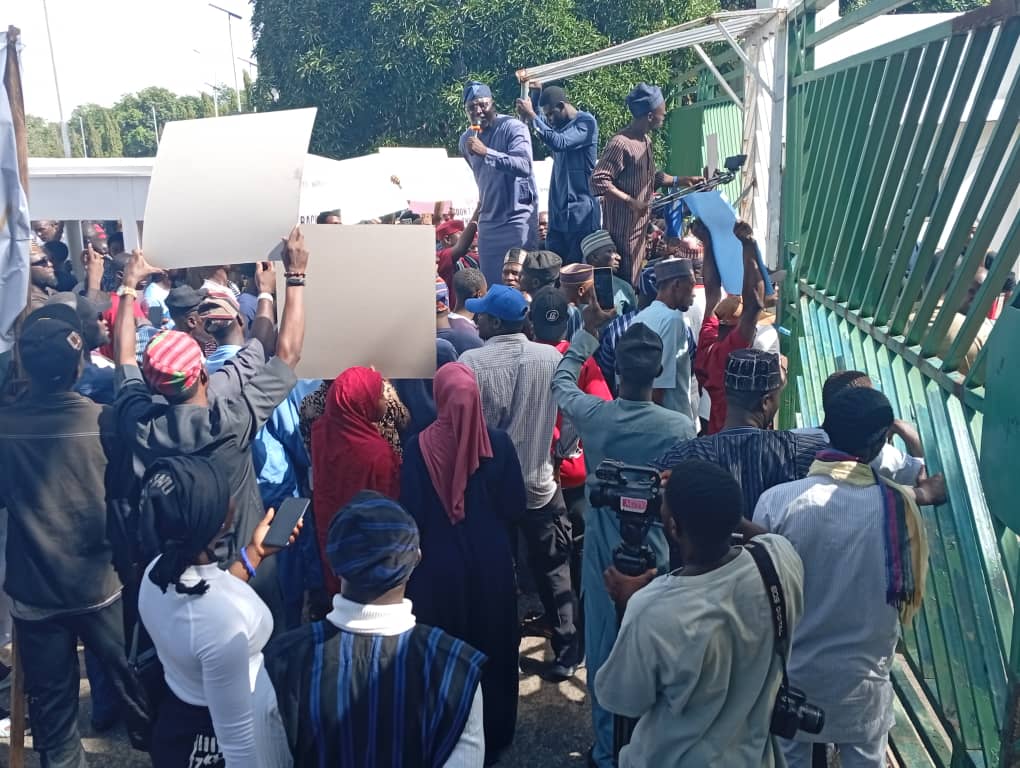
A group of Federal Capital Territory (FCT) natives, under the aegis of the FCT Youth Stakeholders’ Forum, have staged a protest at the National Assembly on Wednesday, demanding the reversal of the appointment of Solomon Adodo, a native of Benue State, to the North Central Development Commission (NCDC) board.
The protesters claimed that the appointment was unfair and excluded the FCT, despite its strategic importance as the nation’s capital. They demanded that an FCT indigene be appointed to the board instead, citing the need for equitable representation and development in the territory.
According to the spokesperson for the protesters, Hon. Dalhatu Ezekiel, the appointment of Adodo without representation from the FCT is a clear indication of the territory’s marginalization.
They emphasized that the FCT, being the seat of power, deserves fair representation in the NCDC board.
The protesters’ demands the immediate Reversal and annulment of Adodo’s appointment, the appointment of an FCT indigene to the board and also the Prioritization of the rights and interests of the FCT’s original inhabitants, comprising nine tribes.
However, the protest took a dramatic turn when the police deployed tear gas to disperse the protesters, who were denied access to the premises of the National Assembly.
The use of tear gas created tension within the Assembly complex and affected not only the protesters but also journalists and other stakeholders in the vicinity.
Despite the challenges, the FCT Youth Stakeholders’ Forum remained resolute in their demands, urging the National Assembly to intervene and ensure that the FCT’s interests are protected.
The outcome of the protest is still awaited, as the protesters await a response from the National Assembly leadership.The protest highlights the growing concerns about representation and development in the FCT, and the need for inclusive decision-making processes in government appointments.
The use of force by the police has also raised questions about the right to peaceful protest and the need for dialogue between government agencies and citizens.